Showing posts with label lobster fishing. Show all posts

Tuesday, November 1, 2011

What Size is Your Lobster?


Maine lobstermen have been harvesting lobster in the same environmentally conscious way for over 100 years. These practices include “V-notching” female lobsters as well as setting a size limit for harvested lobsters.

Maine’s lobster size limit is 3 ¼ lbs. so as to allow all juveniles time to mature and reproduce before they are harvested. Every lobster caught is measured to ensure the survival of our favorite red friend.

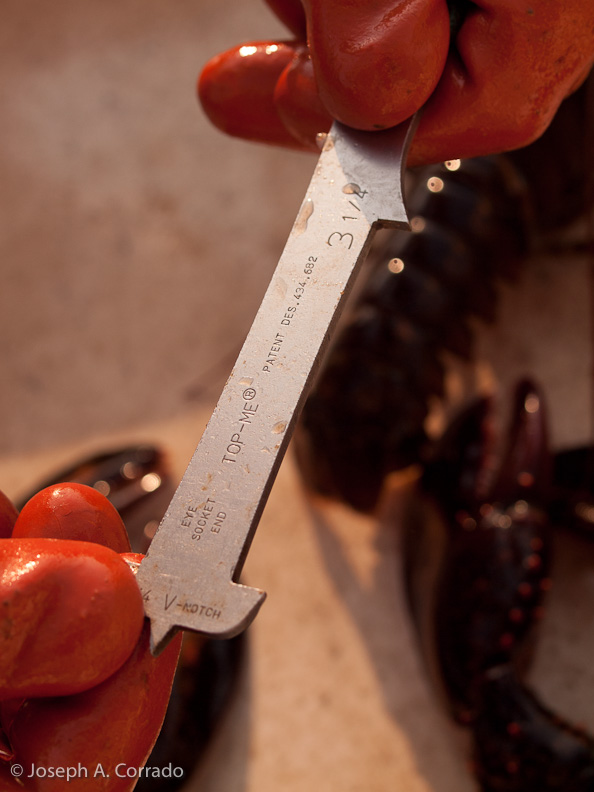
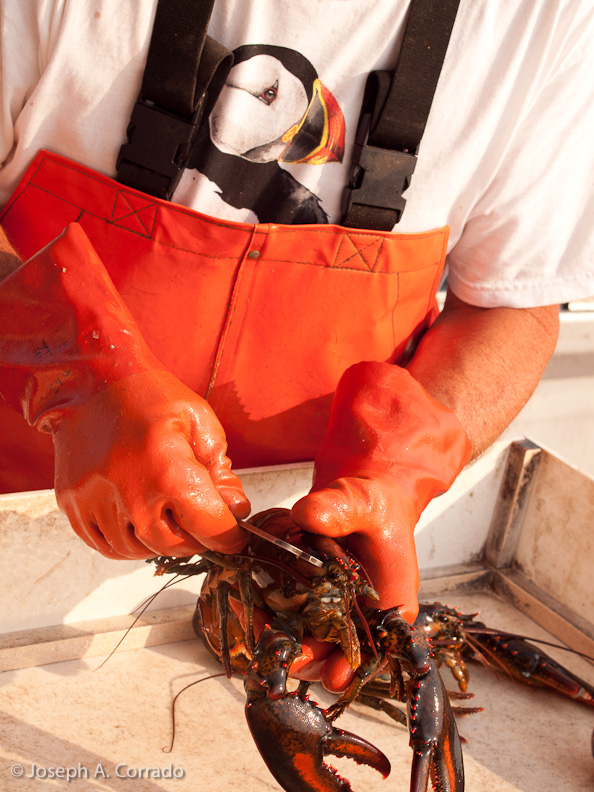
Lobsters are measured based on the size of their carapace, the hard shell segment between the tail and the head. Lobstermen place a metal gauge at the lobster’s eye socket down the carapace. If the lobster’s carapace does not fit between the jaws of the gauge, then the lobster must be thrown back.

Lobsters can also be too small to be caught as well. Lobsters too small to harvest are called shorts. Lobster lovers in Maine typically dine on 1, 1 ¼, and 1 ½ lb. crustaceans!

Tuesday, October 4, 2011

Lobstah Facts!


Love lobster? Well we hope you enjoy these “lobstah” fun facts!

General information about our little red friend:

 The first recorded lobster catch was in 1605. That’s a long relationship that we have had with our red little friend!

 Before the lobster gained popularity in the mid-19th century it was considered a mark of poverty served to prisoners, servants, and widows. Servants even specified in employment agreements that they would not eat lobster more than twice a week!

 In 1828 Maine passed a law banning out-of-state lobster-men. So you can trust that your Maine lobster has been caught by a true Maine-ah!

 The largest Maine lobster catch weighed in at nearly 71 million pounds for a value of over $285 million. Now that’s a lot of lobstah!

 The largest recorded lobster was caught off of Nova Scotia weighing in at a crushing 44 lbs. and an astonishing 3 ½ feet length.

True life: lobster

 Depending on the temperature of the water (lobsters grow slower in colder waters), it takes a lobster 5-7 years to grow to maturity and a size that is catchable.

 Our little red friends stay with us for a long time—some are even capable of living up to 100 years!

 Lobsters naturally have one larger forward claw, causing them to be identified as left-handed or right-handed. The meat from the smaller claw is more tender and sweeter, thus considered more succulent.

 Lobsters can regenerate their antennae, legs, and even claws. Losing a claw is common as lobsters will frequently amputate them to escape any danger on the ocean floor.

 Lobsters grow by shedding their shell and developing into a new, larger shell--this process is called molting. The molting of lobsters is how we get our soft and hard shell lobsters. Lobsters that have recently shed their old shell in order to grow a new one are considered soft shell or “new shell”. The shell is much easier to get into and the lobster meat tends to be much sweeter than hard shell. A hard shell lobster has already grown into its shell. That is why these lobsters are so much harder to get into!

 A young lobster in its first 5-7 years will molt about 25 times a year while mature lobsters only molt about once or twice a year—usually in the summer. Older lobsters only need to molt once every 3-4 years.

 Want to know if a lobster is male or female? It’s easy! Located on the lobster’s tail are swimmerets-- small flipper like appendages that help the lobster swim. Look the first pair of swimmerets closest to the lobster’s head. If they are hard and bonelike your lobster is a male, but if soft and featherlike it is female!

 Lobster eggs spend at least ten months on a female lobster, the colder the water, the longer it takes the eggs to hatch!

 When the eggs are ready to hatch, the mother will shake them out of their shell, releasing them as larvae. The larvae will float to the surface for 4 to 6 weeks. This makes the larvae very vulnerable to attack by fish, birds, and other sea life. In fact, less than .1% of larvae survive this surface period before sinking to the ocean floor to develop.

Eating lobster:

 The best time of the year to enjoy lobster is after Labor Day! Lobstermen bring in over 50% of the annual Maine harvest during the fall season.

 Maine set a size limit of 3 ¼” for lobsters to allow all juveniles to mature and reproduce before they are harvested. Lobster lovers typically dine on 1 lb, 1 ¼, and 1 ½’ crustaceans!

 Lobsters are a fantastic “dieting” food because they are high in protein and
low in fat. Compare a 3 ½ ounce lobster of 90 calories (without butter of course) to the 163 calories found in the same amount of chicken or 280 calories in a sirloin steak. How could you go wrong?

 It is a common misconception that lobsters scream when they are boiled.
Don’t worry, the sound you are hearing is actually the whistling sound of steam escaping the shell. Eat on!

 Lobster meat will become tough if overcooked. To avoid this, check the lobster frequently. When the meat turns opaque it is done and should be immediately removed from heat.

 After you have boiled your lobster use a pair of kitchen shears to snip the claws. This will allow for the water to drain and keep your plate and other food from getting soggy!

 If you are having lobster for a formal occasion, pre-crack the lobster for your guests by cutting lengthwise through the underside of the tail with scissors (just the shell, not the meat). You can also crack the claws to save some pounding at the dinner table. Enjoy!

 Don’t miss out on the flavorful meat in the legs! To get this succulent meat you can either suck it out or use a rolling pin to roll down the sections of the legs and push the meat out of the end.

 Additional cooking of already boiled lobsters tends to toughen the meat and make it less palatable. So use your left over lobster meat for a salad or a cold dish.

Want to brush up on your lobster lingo? Check out our post on lobster terms used by real lobstermen!

Friday, September 16, 2011

Captain Dan’s Catch


When he’s not busy getting lobsters ready for Crate to Plate clients, Captain Dan is fishing around West Penobscot Bay’s many inlets and islands.

So where does he sell his daily catch? Besides his Crate to Plate traps and direct sales, most of Captain Dan’s lobsters are sold locally. This means that you can find Captain Dan’s lobsters in Lincolnville, Islesboro, and Rockland. You can also find Captain Dan’s lobsters at Natalie’s restaurant in the Camden Harbour Inn!

For more information on

Wednesday, August 24, 2011

Crate to Plate's Local Catch

Want to know where your Crate to Plate lobsters come from?

Captain Dan and the Fisher Girl sail out of Saturday Cove in Northport, one of the many small inlets that make up West Penobscot Bay. Crate to Plate lobsters come from traps placed along the coast stretching from Lincolnville to Bayside. Coast dwellers may see the Fisher Girl near Islesboro’s ferry dock, at Lincolnville beach, or even as far north as Searsport.

While fishing, Captain Dan sails around many of the islands littering the Maine coast including Flat Island, Seal Island, and Ram Island— all bordering Islesboro’s shore.

Wednesday, August 10, 2011

The Fisher Girl

Here is a picture of Captain Dan’s lobster boat the Fisher Girl. Captain Dan acquired his fishing boat in 1999 after beginning fishing in 1994. The boat is named after a picture the Captain saw of a girl enjoying a day on the beach.


Wednesday, August 3, 2011

Lobster Fishing with Crate to Plate


Want to fish with a real Maine lobsterman? Go sailing with Captain Dan on the Fisher Girl and learn the trade that has made Maine famous!

Sailors will live the true fishing experience as they navigate the rocky coast picking up traps. Watch eagles sunbathing on Flat Island while learning to haul traps and pack bait bags. Discover a harem of seals laying on a rocky key while emptying traps and banding lobsters.

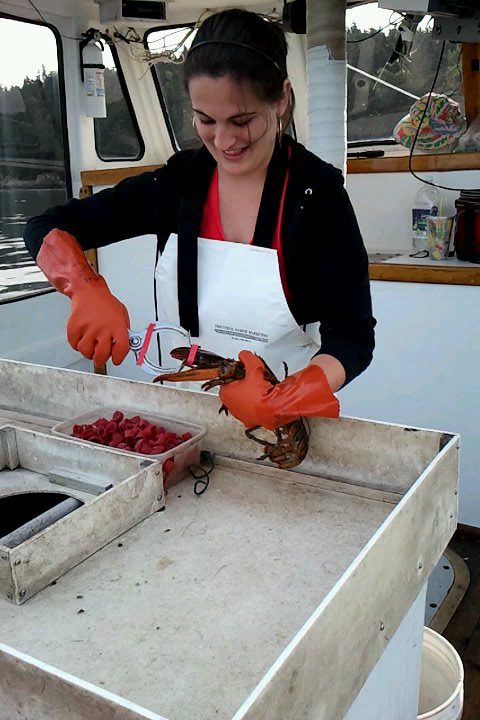
Sailors will experience the beauty of ocean life while becoming an expert on all things “lobst-ah”. Learn how to correctly pick up a lobster, the difference between a hard and soft shell, or even how to “V-notch” a hen. Guests will practice the same environmentally conscious lobster procedures that have been a part of Maine life for over 100 years.

So join Crate to Plate and Captain Dan on a fishing adventure and discover Maine’s lobster in a whole new way!

For more information on how to schedule a tour with Captain Dan, please visit the Crate to Plate website.

Wednesday, July 27, 2011

Meet Captain Dan!


Crate to Plate may have begun in November 2009, but Captain Dan’s relationship with our lobster friend actually began in 1994.

A long time ocean lover, Captain Dan has been sailing since 1979. After graduating from college, Dan moved to Florida to start work in the corporate world. Six years later, Dan got his Captain’s license and began sailing around the world delivering and servicing yachts.

On a routine sail to deliver a boat, Captain Dan ended in up in Maine. Upon seeing the state’s beauty and possibilities, he decided to stay in Vacationland to discover the Midcoast’s rocky beaches, island speckled coast line, and its most famous export—lobster.

Deciding it was time for a career change; Captain Dan embraced his new state’s specialty and began lobster fishing in 1994. A self-taught fisherman, Captain Dan steadily grew his business to include over 800 traps located around the Northport coast.

Today Crate to Plate offers customers a full lobster experience including boat tours for those who would like to learn Captain Dan’s famous trade or the harvest of one of his many traps. Check out the Crate to Plate site for more information on Captain Dan and his lobster friends!

Thursday, June 17, 2010

THE BEAUTY of BUOYS


Lobstermen are an individualistic lot. They are independent, self sufficient and sometimes cantankerous. They often feel put upon by government and underappreciated by those ignorant of the amount of work necessary to achieve a season’s catch.

They are also nature lovers, conservationists by instinct and have a work ethic to match any original settler. There isn’t much whimsy in their work. Playfulness can lead to an error and an error can lead to an accident. That same accident can end a season and the livelihood of a fisherman.

There is one exception Lobster buoys. Each color set, each color placement, stripe, polka dot or color block is unique to each fisherman. The buoys are practical, colorful, whimsical and an indication of territory. Local lobstermen know the buoys of other lobstermen in their area and with rate exception respect the fishing territory they mark.

A primary pre-season task is to replace lost buoys from the previous year. Each buoy must be painted with its unique design before it can be used. Think about the labor involved in painting up to a hundred buoys per season with a usual minimum of three colors. Even if you like to paint it is tedious work. Yet the lobstermen take pride in their buoys as the brand of their work. It as iconic to a fisherman as a polo pony is to Ralph Lauren.